Featured

Pearl Harbor: Finding Hope Amidst Devastation

Her parents called her “Dinny”. It was just a nick name, but it was more suitable for a young girl than her given name. When she was 5, her neighbors invited her to attend church with them. Every Sunday they picked her up and brought her to Sunday School at Grace Bible Church where she learned about Jesus and accepted Him as her Savior.

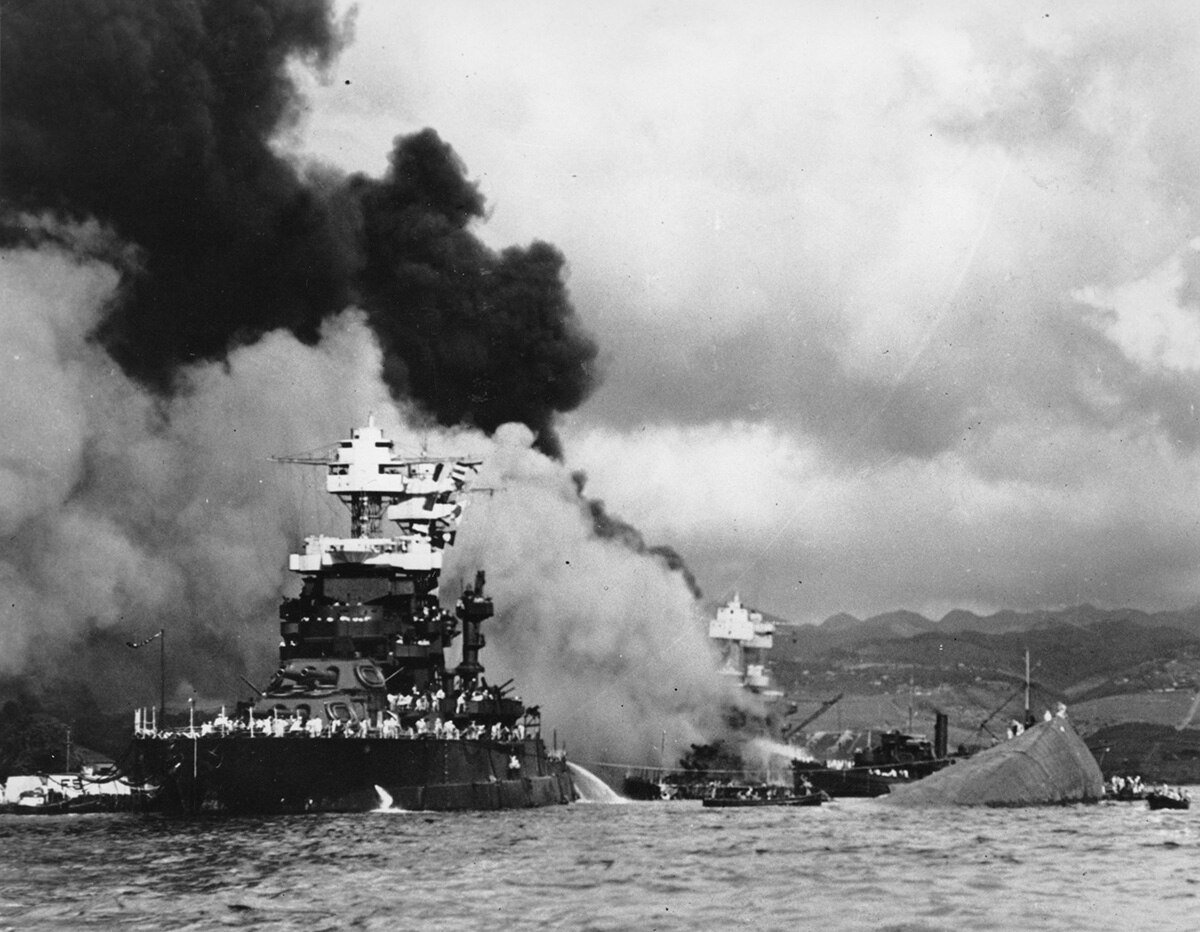
Two years later, her quiet childhood in the San Francisco Bay Area was disrupted by terror.   On December 7th, 1941 a bomb stuck Pearl Harbor where her older brother was serving as a Navy Seaman. The whole community was paralyzed with fear – would Japan drop bombs on California next? Everyone was anxious and afraid about the war, but the telegram Dinny’s family received a few days later, plummeted her parents into despair. Her brother was officially “Missing in Action” after the USS Oklahoma sunk just 20 minutes after being hit by a Japanese missile. Darkness enveloped her family with the gravity of this news.

But while her parents mourned the possibility that their only son was dead…Dinny prayed. She believed that God listened to her prayers and she hoped that somehow, God would bring her big brother home.

Hope….

When we think of hope – we often think of a circumstance, a relationship or a situation that looms dark on the horizon of our lives. Like a raging battle – where danger is threatening, and suffering seems imminent.

It’s interesting that “hope” is most closely linked with feelings of “despair”.

Maybe that’s because the challenges of life have a way of stealing our optimism and hopefulness. It seems that the reality of  life in a “broken world” can make us cynical, anxious, afraid or paralyzed with grief.

A recent Barna study revealed that today’s women are more overwhelmed and anxious than any previous generation. In fact, those between the ages of 18-35, who have never known life apart from the internet, are the most paralyzed with anxiety.

Information overload has, in effect, stolen their joy and robbed them of their hope for a better future. They know too much about the state of the world and all the things that can potentially go wrong. Consequently, they are living in bondage to the “what if’s”. Frozen. Unable to look at the future with any sense of confidence or expectation of a better world –either for themselves or for their young children.

Now, of course, some things are still easy to hope in… like an upcoming vacation, a job promotion, or a new baby.

But it is in the darkest places of our lives…. when those battles are most poised to overwhelm us… that we cry out to God for a kind of hope that only He can provide.

It’s a supernatural hope! A God Sized Hope!

Will you think about your life for a moment?

  • What battles are you engaged in right now? (e.g. Work, Family, Finances, Marriage,)
  • Where are you taking hits? Feeling worn down? Beginning to Lose hope?
  • What circumstance seems most despairing to you? (e.g.Health, Career, Politics, Faith, Romance?)
  •  Is there a relationship that seems broken beyond repair – where reconciliation seems impossible?  (e.g. A Spouse, an estranged friend or hostile family member, or a dying loved one)
  • How would you answer this question?: “I need HOPE right now for __________________.”

Living Hope

For 400 years God was silent to His people. He spoke His last word of warning through His prophet Malachi and then didn’t speak again for four centuries. These silent years are represented in the gap between the Old and New Testament of the Bible. Can you imagine how hopeless the Jewish people felt during these years of silence? Had God given up on them? Was He still there? Did He still care?

Now, aren’t these the same questions we ask when we are in danger of losing hope?

But then, out of the darkness there was flicker of light. Another prophet, John the Baptist emerged and began to proclaim news of great hope…the Messiah was coming.

Jesus was born into the world through the womb of a virgin named Mary: The Son of God embodied in human flesh. He is the light of world who came to dispel the darkness of human life. To bring Light and HOPE to a broken world.

Jesus said, “I am the light of the world. Whoever follows me will not walk in darkness, but will have the light of life.” (John 8:12)

It just takes a flickering flame to dispel darkness, and so the light of Jesus illuminated HOPE for all mankind. No longer was God silent. No longer was God speaking through the prophets. God Himself came to earth to share His good news with us. Jesus is Emmanuel, God with us. He came to rescue us from sin and death. To assure us that He sees us, He loves us, and He knows our desperate need for HIS saving grace.

In Jesus, we don’t have a “hope so” kind of hope. But an invitation into a living hope because Jesus took our sins upon himself on the cross and set us free from death and despair.

Listen to how the Apostle Peter describes this kind of Living Hope in 1 Peter 1:3-9

Praise to God for a Living Hope

Praise be to the God and Father of our Lord Jesus Christ! In his great mercy he has given us new birth into a living hope through the resurrection of Jesus Christ from the dead, and into an inheritance that can never perish, spoil or fade. This inheritance is kept in heaven for you, who through faith are shielded by God’s power until the coming of the salvation that is ready to be revealed in the last time. In all this you greatly rejoice, though now for a little while you may have had to suffer grief in all kinds of trials. These have come so that the proven genuineness of your faith—of greater worth than gold, which perishes even though refined by fire—may result in praise, glory and honor when Jesus Christ is revealed. 

This Living Hope is yours through Jesus Christ. This joy is available to you. God wants to rescue you from your hopelessness through a personal relationship with the Jesus.

  • He is the God who came through the womb of a young virgin named Mary.
  • The God who lived among people and taught us about His great love for us.
  • The God who died on a cross so we could be forgiven of our sins and never face judgment and shame.
  • The God who rose to new life and is alive in heaven right now praying for us and listening to our prayers. 
  • The God who sends His spirit into the soul of every person who says… Yes! I believe it is so!

This is the Living Hope that God has provided for us and invites us to enjoy.

This is the Living Hope that little Dinny had as she continued to pray for her big brother. As Christmas approached, her family grew more despairing. Surely their son was dead….but would his body ever be recovered from the bowels of that ship buried deep in the Hawaiian harbor? The Navy was silent.

Still Dinny prayed.

And then…on Christmas Eve…without any forewarning…her brother came strolling down the middle of Curtis Street where their little house resided. He was alive!

After the bomb hit his ship, he was able to kick out the porthole and swim through burning waters to safely. He never talked much about what happened that night, because the pain of losing so many of his Navy friends was permanently seared in his heart. But the miracle of answered prayer forever strengthened little Dinny’s faith in the God who hears and the God who cares.

That little girl was my mom, Ella May Wilcox Owenhouse, and her brother was my Uncle Mayland Wilcox. Mayland lived for 93 years.

Where do you need Hope rekindled right now?

What battle is raging in your heart?

What fear and darkness is threatening to steal your joy this Christmas?

Will you pray with the faith of a child – not as one who has grown bitter or cynical about life – but as one who dares to hope beyond all reason for God to do great things?

Christmas reminds us that God is with us. Jesus is Emmanuel. He hears our prayers and He is able to do far more than we can ever think or imagine.

Will you place your hope in Jesus this Christmas?

GALILEE

GALILEE

May 29, 2012

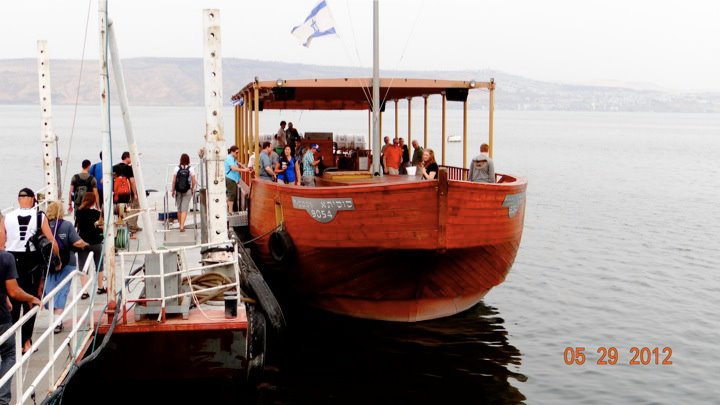
The Sea of GalileeThe air was hot, heavy and motionless this morning as we boarded our boat to cross the Sea of Galilee. It was only 7 AM but it was already 85 degrees. A humid mist hung over the lake and there was a quiet stillness on the water as our boat sailed toward the western shore of the famous Lake Gennesaret or Sea of Tiberias: two other familiar names for this well known body of water.

Could this be the same sea that terrorized the disciples with it’s tumultuous waters and threatened to overturn their boat? Where was that wind that only Jesus could calm with a simple command? Today the water was like glass…. a welcome relief for several members of our group who were anticipating a dreaded bout of seasickness.

When we reached the middle of the sea our boat captain cut the engines and we floated in silence for a short while remembering the time when Jesus was here with His disciples. We thought about Jesus calling Peter to step out of the boat and walk toward Him on the water. We remembered the time when Jesus sent His disciples ahead of Him across the Sea and then walked out upon the stormy waters toward them after a violent storm arose and threatened to tear their boat apart. With just a simple phrase the One, who was active and present in the creation of the world, calmed the seas and stepped into their boat. It was truly amazing to experience the very waters where Jesus revealed Himself as Creator, Comforter and Son of God.

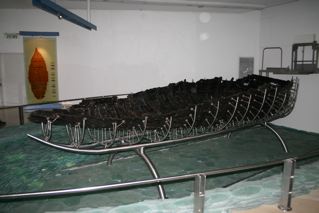
When we reached the opposite shore we viewed an exhibit of an ancient fishing boat that was dated to the early first century.  First Century Fishing BoatDuring one unusual year of drought, the boat was discovered in the muddy banks of the water where it was carefully exhumed and restored. It’s wonderful to see a genuine artifact from the days of the early gospels.

Along the western slopes of the Sea of Galilee many Byzantine era churches mark the traditional sites of Jesus’ ministry. Certainly, this is the area where Jesus spent most of his adult life and every landscape has some connection with His life, miracles and teaching. Unfortunately for us, the weather was oppressively hot and humid. The air was so stagnant it diminished some of the “thrill” of our sightseeing adventures today. The temperature was in the high 90’s, but with the humidity and lack of wind the news reported that it actually felt like 107 degrees!

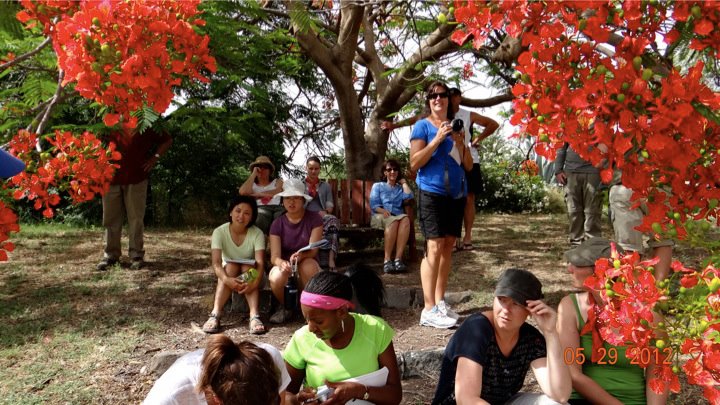
Seeking shade under the HOT sun!

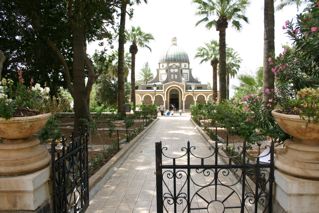
On the Mount of the Beatitudes a beautiful garden setting surrounds a quaint chapel that commemorates the teaching of Jesus in Matthew 5.

The Church at the Mount of Beatitudes.

Down the road in Tabgha, a Benedictine Monastery remembers the miraculous multiplication of the loaves and the fishes (Matthew 16).

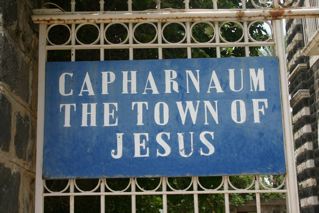
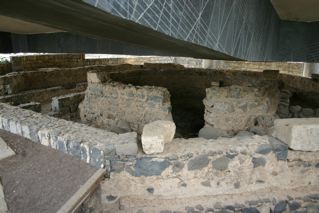
The town of Jesus!The ancient city of Capernaum was especially interesting as it contains the ruins of the actual town where Peter lived and Jesus spent much of His time. We sat by the shores of the Sea and read the gospel of Mark 1:16-20

16 As Jesus walked beside the Sea of Galilee, he saw Simon and his brother Andrew casting a net into the lake, for they were fishermen. 17 “Come, follow me,” Jesus said, “and I will make you fishers of men.” 18 At once they left their nets and followed him.

19 When he had gone a little farther, he saw James son of Zebedee and his brother John in a boat, preparing their nets. 20 Without delay he called them, and they left their father Zebedee in the boat with the hired men and followed him.

The Remnants of Peter’s Home in Capernaum.

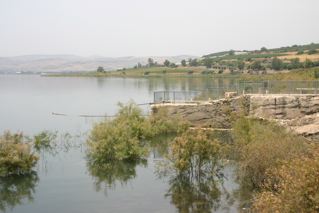
Fishing Harbor in Capernaum.

As I sat by the shores of the Sea and listened to this familiar retelling of a well-known gospel story, the events suddenly seemed so natural within the context of the environment. Capernaum is a fishing village located on the shores of Galilee. Peter’s home was just a few yards from the shore where the fishermen docked their boats and cast their nets into the lake. Given this perspective, what could be more natural than for Jesus to call out to these fine men and invite them to know Him and join Him in His ministry to the world? Truly, this land is like reading a 5th gospel that brings a depth of reality and normality to events that previously appeared foreign or awkward across the continuum of time and space.

In Chorizin we found some welcome shade for lunch and enjoyed a time of exploration through the ruins of a synagogue that boasted an ancient “Moses” seat as well as a fine example of an Olive press. Our final exploration for the day was a visit to the old fisherman’s city of Bethsaida where the crowds once followed Jesus in search of healing.

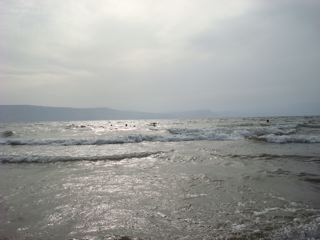
When we returned to our beautiful Kibbutz for the evening we were greeted with a special surprise…the waves on the Sea were churning tumultuously!

The Churning Sea!

Without warning, the breeze from the Mediterranean Sea blew inland through the valleys of the lower Galilee region and turned our calm morning waters into an agitated surf. At Last! THIS is the Sea we read about in scripture! How Great is Our God to have given us calm morning waters to travel upon, for surely we would have been frightened and sea sick if we were on the water this evening.

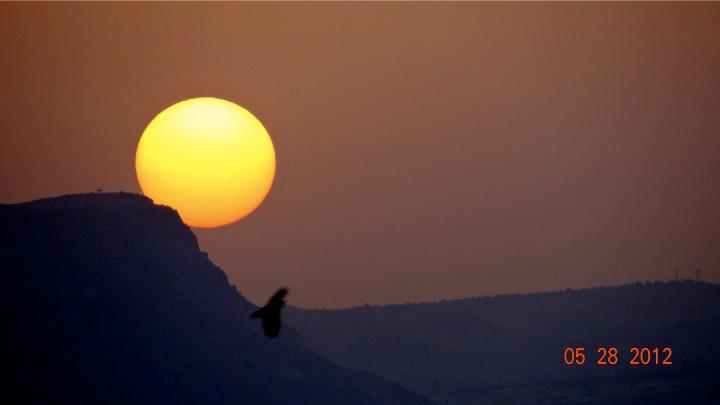
And finally, as if to put His crowning insignia upon the day, the Creator of the Universe displayed His creative glory in a stunning sunset. Breathtaking! Some experiences simply defy words!

Sunset over Galilee

CAESAREA AND THE MOUNT CARMEL RANGE

MAY 28, 2012

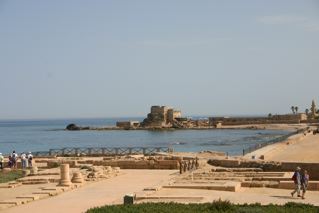
Today we embarked on a four-day exploration of the land of Galilee. Our first stop was the city of Caesarea, located on the Plain of Sharon on the Mediterranean Sea.

CAESAREA by the Sea

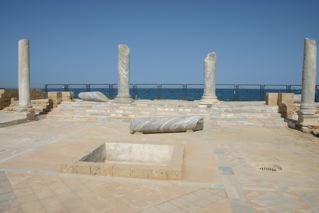
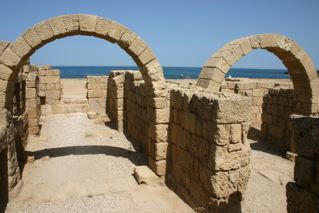
This beautiful seaport setting was one of King Herod’s many lavish building projects (25-13 BC) with an artificially made harbor that could port over 200 ships. This was even larger that the harbor in Athens! Herod the Great, a megalomaniac by any standard, was a man of incredible vision and political savvy. He named the city in honor of the Roman Emperor Caesar (Caesar Augustus), dedicated a temple to Augustus and built a large hippodrome (horse racing track), palace and amphitheater.

CAESAREA

The setting of the city is one of the most beautiful locations I have ever seen. As we sat together in the outdoor theater overlooking the turquoise waters of the sea, we were reminded of the story in Acts 12 when Herod Agrippa was struck dead by an angel in this very place because he refused to give glory to God. This happened when some commercial trade partners from the north sought to worship him as a god instead of the One True God of Israel. It was a stark reminder that the glory for all of our accomplishments belongs to the Lord alone.

Acts 12: 21 On the appointed day Herod, wearing his royal robes, sat on his throne and delivered a public address to the people. 22 They shouted, “This is the voice of a god, not of a man.” 23 Immediately, because Herod did not give praise to God, an angel of the Lord struck him down, and he was eaten by worms and died.

If the walls of Caesarea could talk they would tell stories about the apostle Philip who came to live here with his four daughters who were considered prophetesses. (Acts 8:40). They would reveal the vision that Peter received here about a Gentile man named Cornelius who was ready to hear the gospel and receive salvation (Acts 10). It was also Caesarea where Paul returned at the end of each missionary journey and where he later appealed to Caesar before being imprisoned.

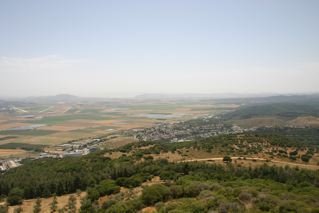
The beautiful Jezreel valley from Muhraga.

Next, we turned northeast and traveled to an ancient ‘high place” in the Carmel mountain range called Muhraga.

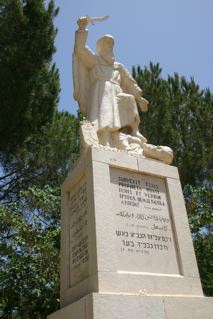
The Prophet Elijah was here.

A monastery now rests on this biblical site where the prophet Elijah challenged Ahab to put his Canaanite god to a test. The story in 1 Kings 18 recounts the day when a sacrifice was placed upon the altar and Ahab’s god (the god of fire) was proven  powerless in his ability to consume the sacrifice by raining down fire from heaven. Instead, Yahweh proved Himself to be the One True God and all the people proclaimed: “The Lord—he is God! The Lord—he is God!” (1 Kings 18:39)

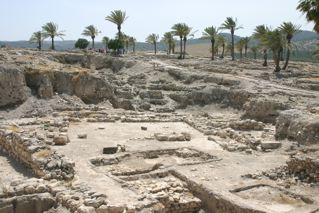
A little further southeast of Muhraga is the ancient city of Megiddo. Megiddo sits upon a tel (a high hill). It is an ancient city that is located at a very strategic place for conquerors who wished to control the lush and fertile Jezreel valley.

The ruins of Megiddo contain 25 layers of civilizations.

Standing atop the ruins of Megiddo it struck me that under my feet lay 25 layers of civilization that have been conquered by invading enemies. 25 times in Megiddo’s history, the inhabitants were killed, the buildings were destroyed and a new city was established on top of the spoils of war. How many bones were buried beneath my feet? How much bloodshed, hatred, fear and devastation took place here? Was this tel a God created mound of earth, or simply a tall cemetery of conquered communities? The 16th layer of this mound belonged to King David who conquered Megiddo and then dug a tunnel to a spring outside the city in an effort to fortify his people against the next attack. But when the 17th conqueror came – the city was once again dominated by foes who ravished and rebuilt.
Revelation 16 indicates that the battle of Armageddon will be fought at Megiddo. As I stood upon this place that so clearly represented the nations of the earth battling against one another, I thought how profoundly appropriate it would be for the Lord to wage his final battle against the prince of this world in a place that contained the ruins of so many warring civilizations. The more I explore scripture, the more I marvel at the complexity and completeness of each connecting event to the overall story that God is still writing upon the events of human history. How will it all unfold? I am hungry to know more! I look forward to the day when I am able to connect the dots in my own thinking and say “ah ha” when it is all revealed for my finite mind to comprehend.
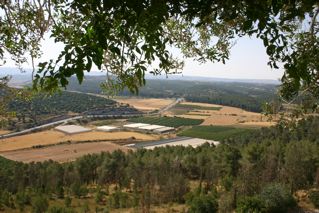
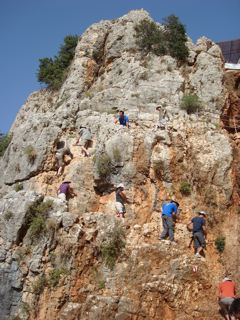
Climbing down Mount Arbel.

Until then…. a blazing hot and humid late afternoon climb down the cliffs of Mount Arbel just about conquered me. 🙂 The view of the Jezreel Valley from the summit was spectacular and tomorrow we will look forward to exploring the valley floor and the strategic cities that had biblical significance.

UNITY AND JOY IN CHRIST

May 26 & 27


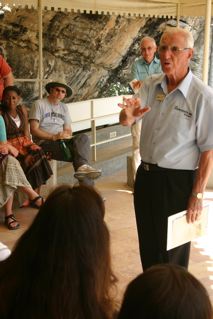
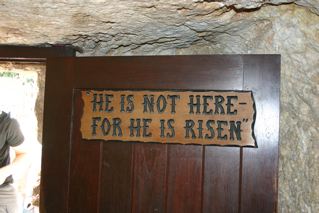
Saturday morning we left the Old City and took a nice walk to visit the Garden Tomb. The Garden Tomb is a beautiful site that commemorates Jesus’ burial and resurrection. While the more recent age of the discovered tomb and the location of that particular site make it a debatable location for Jesus’ original burial site, the Spiritual presence in this place is powerful. Alistair, our Scottish tour guide on site, walked us through the garden and shared one of the most compelling testimonies of the gospel I have ever heard. He spoke with humility about the proposed events in this particular location – but he spoke with passion and conviction about his faith in Jesus. He brought tears of joy and gratitude to my eyes as he so beautifully explained Jesus’ death, resurrection and ascension and how the Garden tomb commemorates these historical events.

Throughout the garden voices are heard singing songs of praise and worship in many different languages. There is something about being in this place that makes people want to sing! Groups of visitors from many nationalities were gathered under shade trees and near flowering shrubs singing songs of praise and worship in their native tongues. We couldn’t recognize the words, but we knew EXACTLY what they were singing: Praise to Jesus! He’s Alive!

Suddenly it struck me…THIS is a foretaste of heaven! Here people from all nations are gathered together in this majestic place to sings songs of praise and worship to the Lord because He is alive! He resurrected from the dead! The tomb is empty! And we have come together as a people of different colors, different shapes and sizes, different dress, and different languages to give praise to God! There is so much joy in this place it overwhelms your heart!

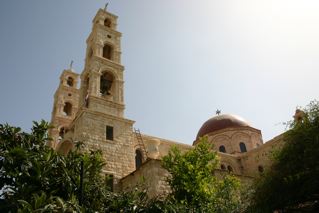
Sunday we had a similar experience of joy and unity in our visit to Christ’s Church in the Old City. The building is a classic, traditional style church with tall spires, ringing bells, lofty ceilings, rounded arches and wooden seats. As the people streamed in for the 9:30 AM – 2 .5-hour service, I noticed again what a diverse group we were. The congregation represented people from all over the globe who gathered together to worship the Lord. The pastor was a Scottish man who was a passionate and articulate preacher. The songs of worship that we sang were many of the same songs that we sing in our home churches. It was amazing to be standing among a group of people from all over the world and praising the Lord in song with words and melodies that were familiar to all of us! Again! A slice of heaven!

Most significantly was the fact that Sunday was Pentecost! Pentecost is the day when the Holy Spirit first descended upon the disciples while they were in the upper room in JERUSALEM! Then the Holy Spirit came upon the believers who were gathered in the outdoor courtyard in JERUSALEM! So here we are in JERUSALEM! On the day of Pentecost reading Acts 2 and celebrating the wonderful gift of the Holy Spirit with people from all nations who have gathered together in this beautiful church to praise and worship Jesus!  Both of these experiences heighten my anticipation for that day when we will all be gathered together in peace, joy and unity to worship the savior for all eternity.

SAMARIA

MAY 25, 2012

Traveling to Samaria means crossing out of Israeli-controlled territory and entering the land that is under the dominion of the Palestinians. It is odd to be crossing through check points with tall concrete dividing walls within the same nation. But there is a noticeable different in the cleanliness of the land and the deterioration of the buildings once you cross the border. More garbage lines the streets and more buildings have broken out windows. The streets seem quieter because there is less commerce and more people loitering  with little to do.

Jacob’s Well is located inside this church.

In the region of Samaria, the official site of Jacob’s well is located under a beautiful Byzintine church. Unlike many biblical sites where the exact locations are often ‘theorized” by archeologist and biblical scholars, wells are immoveable and so we were certain that we were indeed visiting the authentic place where Jesus met the Samaritian woman and offered her Living Water. What a thrill to be standing beside that deep pit of fresh water! The church would not let us take pictures, but it is a sight I will always remember.

Mt. Gerizim and Mt. Ebal


Next we drove through the streets of Naplus where we came to a place known for it’s recitation of blessings and curses in the Old Testament.This was a place that looked much like a  dangerous slum back in the US. As we stood in the small valley inbetween Mt. Gerizim and Mt. Ebal we recounted the ancient scene surrounding the giving of the law in Deuteronomy 11 and Joshua 8. The narrowness of the place where these two mountains converge gave me a clearer understanding of how the two shouting parties could have heard each other making their proclaimations many years ago.

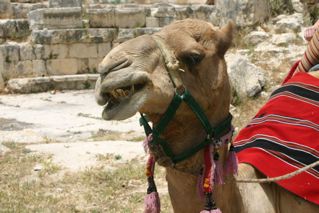
From there we drove up to the little mountain-top town of Samaria. So much of the land feels just like it must have felt thousands of years ago. It is hot and dry here. The buildings are very old. The streets are narrow. There are not many indicators of the modern world. In Samaria. everyone tries to make money off the visitors so when they see our bus pulling through the streets they accost us with their wares. Even a local camel owner saddled up his beast and brought him to our lunch site to solicit camel rides for 10 shekels. Of course, I’m such an animal lover, I was happy for the opporunity to snap a few close up pictures of a camel. I think he was even smiling at me. 🙂

On the top of the hill in Samaria we visited the ruins of the old city. There in the crumbling stones of an ancient church it is believed that John the Baptist is buried in the crypt below. There were candles burning in his memory and offering plates set near a Byzantine era painting. Of course – locals were following us around and trying to sell us the moon. They are always nice to your face until you decline to buy something and then you shouldn’t be surprised if they spit on you in disgust. This happened to me on the site of Sebasti where a local man tried to charge us money to enter a site that was supposed to be free. He was demanding 10 shekels a person to open a gate for us to see a public monument. When we declined to pay him and then eventually refused to enter the site  all together – he spit in disgust as he passed by me.

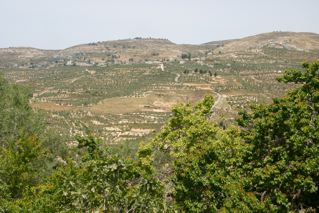
The hills of Samaria

Samaria is a place that many people have not been able to visit in recent years because of the ongoing conflict between the Palestinians and the Israelites over the land. We were grateful for the peaceful relations that allowed us to visit these sites, however it is not a place I am eager to return to. I felt uncomfortable with the instability of the region and the usury of visitors. We are a group of students not tourists, and still I felt manipulated and preyed upon. It was a welcome relief to cross back over the border and feel safe and secure behind the ancient walls of the Old city of Jerusalem.

THREE DAYS IN THE DESERT: DAY THREE

Day Three: The Dead Sea

I have heard stories about the Dead Sea…but no one can accurately describe the feeling of being in the vast open sea bobbing like a cork. It’s surreal…especially for those who can’t swim or who fear the water. Today this new experience was my personal highlight!

The Wilderness

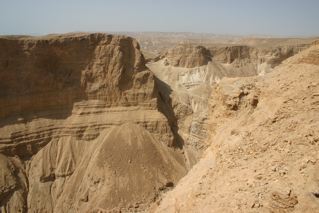
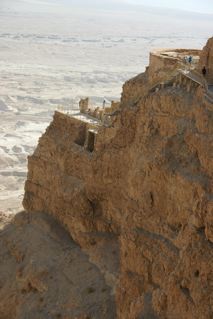
But first! We woke up early and drove  through the desert wilderness to a place called Masada. Masada, in my opinion, should be listed as one of the seven wonders of the world. It is a magnificant palace location high upon a desert plateau overlooking the Dead Sea. The steep rugged mountain terrain of the wilderness here  far exceeded my expectations. Truly, this is a place with striking geographcial features.

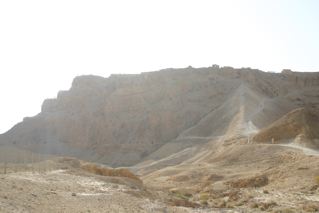
Masada is atop this desert plateau.

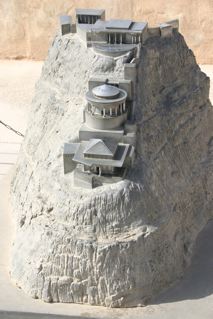
Masada was a majestic fortress that Herod built. It was also a place where the Jewish zealots took refuge from the Romans after the fall of Jersualem in 70 AD, Most amazing about the site is the siege ramp that the army spent three years building during their fanatical pursuit of capturing the Jews who were hiding out in Herod’s abandoned fortress. The history here is so rich. I am eager to read some of Josephus’ writings this summer and learn more about the events surrounding this region and time period.

Here are some views of Masada.

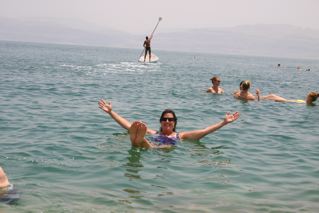
Bobbing in the Dead Sea!

From here we traveled to the Dead Sea for a lunch break. We were forewarned that it was not wise to be in the salty water for more than 15 minutes or your body can become overly dehydrated. Many of us were eager to experience the sea water for ourselves and enjoy the feeling of floating. Because the water is 30% minerals, it is denser than our fluid-filled bodies and it makes it impossible for us to sink. It was so odd to be in water that was over 20 feet deep,  yet still standing tall with half of my body up in the air.

Unfortunately, the Dead Sea is dying. It has shrunk by tremendous porportions in the past 20 years as more and more water from the Jordan River is being diverted into fields for irrigation. This has posed quite a dilemna for Israel….should they restrict water useage from the Jordan in order to maintain the health of the Dead Sea? The water that flows into the the sea from the river is providing crops and food for the people here. But I wonder what will happen to our planet if the Dead Sea dies. Already we can see how much the water line has retracted from the mountains in just a few years.

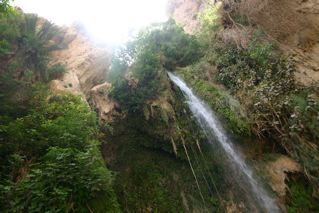
The fresh water falls of En-Gedi

Our next stop was the fresh water spring of En-Gedi. Here in this beautiful desert oasis David hid in a cave while his enemy Saul was “relieving” himself. While David had the opportunity to kill Saul, he displayed restraint by only cut a corner of his robe in order to show Saul that he had spared his life. The hike up the canyon was littered with fresh water falls and the sounds of gurgling water. You can’t imagine what a joyful noise water makes when you’re in the desert wilderness.

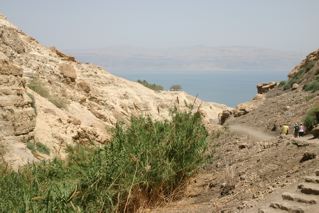
The view of the Dead Sea from En-Gedi.

At the top of the falls, there is a stunning view of the Dead Sea. Again – a beautiful place with a rich history from the Old Testament.

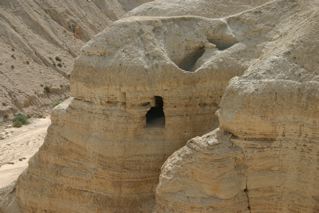
The caves of Qumran.

Our last stop for the day was Qumran. This is the place where the Dead Sea scrolls were discovered in 1947. Clay pots filled with ancient manuscripts of the scriptures were found in these caves by a young shepherd who was seeking to direct his goats.  One day after throwing a stone into a cave, he heard something break. The Dead Sea scrolls were the greatest biblical discovery of our century as they authenticate the accuracy of the words that have been preserved in our modern day Bibles. It was thrilling to visit this location and see the caves up on the cliffs.

After such a full day we boarded our bus for home….Old Jerusalem that is. I have fallen in love with this city. It is a place filled with people from all nations. In just a short walk you hear languages from every country and see clothing  representing every religion. There is something sacred about this city. Behind the old walls there is a feeling of safely. People walk to and fro – sharing human fellowship and experiencing a great sense of community. (It’s so different from our life in Oregon where we live in busyness and isolation behind computers and separated from society at large) Despite the divisions that exist among the four quarters of the city, there is commraderie here. Everyone speaks to you. Visitors are not only welcomed – they are the backbone of financial provision for the merchants. It’s not unlike the days when Jesus was here and everyone flooded into the city for the various religious feast and festivals. For the first time… I think I can clearly envision the heavenly city with all the people from all nations coming together to worship the Lord. I can imagine how we will enjoy His Holy Presence in the company and fellowship of believers from all over the planet. It will be Awesome indeed!

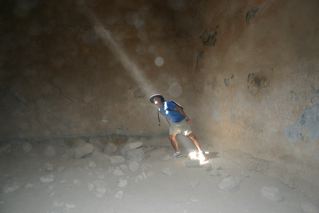
Bob found a shaft of light in an ancient cistern at Masada.

THREE DAYS IN THE DESERT: DAY TWO

DAY TWO: THE NEGEV – THE WILDERNESS OF ZIN

I was a little nervous about our agenda for today. Today we needed to be prepared for a hike…not a walk, mind you, but a HIKE! I think many of us were a little worried about how we would survive the desert heat today as we prepared ourselves for a strenuous hike up the wilderness canyon of ZIN!

Tel Arad

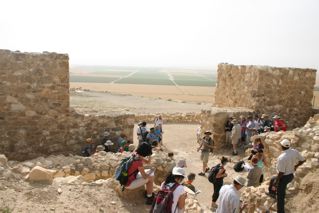
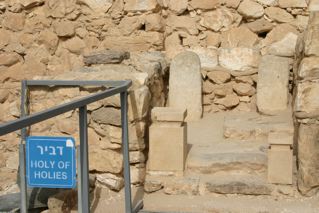
But first, we began our day atop Tel Arad. Tel Arad is a high place in the Negev where the Canaanites built a city and later the Israeli’s built a fortress with a holy temple (gasp!). Thinking it was too far to travel to Jerusalem for the annual feasts and worship festivals, they built their own temple and sacrificial altars. This was displeasing to God.

We talked about syncretistic worship and how we often worship false ideals or objects while seeking to simultaneously worship the One True God.

The Holy of Holies – in Tel Arad? (Tisk Tisk)

It was a good reminder to all of us that we must keep a vigilant watch over our lives and make sure that we are not putting a person, place or thing on the throne where God is rightfully seated. I have seen a lot of idol worship on my walks throughout the Old City of Jerusalem. Many people come here to touch the places where Jesus walked or where He died and was buried. They seem to be seeking a connection with the Lord through these objects that they kiss or weep over. Indeed,  it is very moving to stand in the places where Jesus stood and walk the streets where He walked. It is also powerful to stand up on the temple platform where the temple was located and where Jesus taught. But I am so thankful that my connection with God Almighty is not through the relics of ancient history, but through His Living Spirit that resides in my very being. Whereever I go, He is with me. And while I’m thrilled to be exploring His Holy Hometown – I know that He will accompany me back to mine next week. It is not the sites here that are holy – it is me who is wholly set apart unto Him, and therefore made Holy by His spirit within me. 🙂

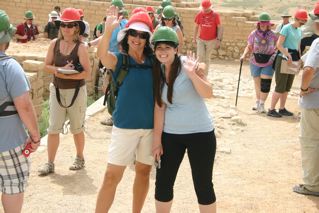
My new friend Chelsea Lane explores BeerSheva with me.

From Tel Arad we went on to BeerSheva. This was another place where a four horned altar was set up for unauthorized sacrifices to the Lord. 2 Kings 23 records the time when Josiah and the high priests from Jerusalem when through this land and tore down all the high places of worship that were displeasing to God. This is also the place where Abraham entered into a covenant with Abimelech in Genesis 21:22-32. The history here is so rich and spans so many years of Biblical narrative.

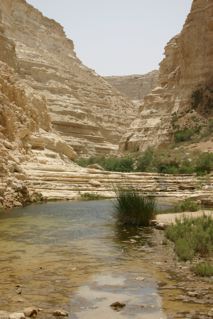
Finally we arrived at the bottom of a deep canyon…the wilderness of Zin. The moment of trepidation was here at last. But…guess what? This was the highlight of the day for me!

The Wilderness of Zin

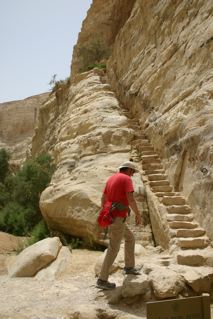
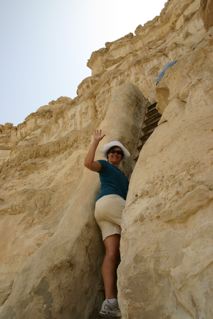
Only pictures can tell the story of this beautiful canyon that we climbed. We had to go up stairs that were cut into the canyon walls and hold onto handholds that were welded onto the stone cliffs.

Stone Steps are cut into the canyon walls.

At one point we just had a steel ladder in front of us to climb. High above us a Ibex watched us navigate the steep terrain…but OH! THE VIEW!! We worshipped God for his magnificent creation. We praised Him for the glory of this desert oasis amidst the deep canyon here in the midst of the desert wilderness. And of course – we celebrated our victory in making it to the very top where our cool air-conditioned bus was ready to welcome us and carry us back to our youth hostel in Arad. Ahhh….

Can you see the Ibex on the rocks?

THREE DAYS IN THE DESERT: DAY ONE

DAY ONE: THE SHEPHELAH

Today we embarked upon a three day journey to the Negev. The Negev is the south-eastern part of Israel where the dry desert wilderness was the backdrop for much of Israel’s Old Testament history. As we left the Old City, we traversed the low lying hills (called the Shephelah) and the six valleys that connect the Coastal plain to the Hill Country. (Remember, I’m here to learn about the “geography of Israel” 🙂 )

The Elah Valley where David fought with Goliath.

The Shephelah is quite beautiful and it was in these valleys in between the western hills that some of the most famous biblical battles took place. For example, in the Elah Valley, David fought with Goliath and defeated the Philistines. In this place, our class gathered together on the land and read the biblical account as we divided into two opposing parties and acted out the famous slingshot victory of young David upon his gigantic foe. It was great fun – and  I will never teach that passage again without remembering exactly where that battle took place.

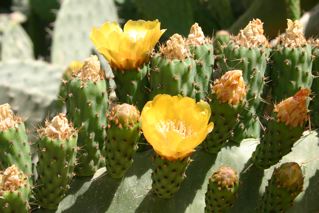
The desert cactus adds color and beauty to the Shephelah.

In the hill country we were able to see the places where the Israelites and the Philistines had their respective camps. The Israelites were camped to the east in Socoh while the Philistines were camped to the west in Azekah. Between them lay the valley where their battles took place and the ark of the covenant was taken from the Israelites. We talked about how the Israelites had mistakenly believed that the Ark would act like a good luck charm and bring them victory in their battles. But when it was taken by the Philistines, it became a curse to them. We relived these battles through the reading of passages in 1 Samuel and we walked through the ruins of the ancient cities of Beth Shemish, Azekah, Beth Guvrin, Lachish, and Ashkelon. It’s fascinating to see the archetecture of these biblical locations and spy the terrain as it was in the days of old. Many of the buildings have crumbled but the landscape is still untouched by development and in a similar state to how it was thousands of years ago.

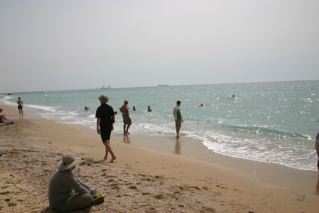
The Mediterranean Sea at Ashkelon.

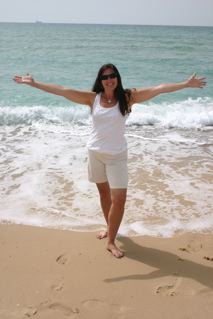
Refreshment is found at the Seashore!

The high light of our day was a dip into the Mediterranean Sea. When we visited the city of Ashkelon we stopped  at a beautiful spot near the ocean and took a nice long break by the sea. The sand is like powdered sugar and lined with unbroken sea shells. I remember finding beaches like this when I was a child in California. The air was heavy, hot and humid, but the water was warm and refreshing.

One of the most special parts of our trip is the commarderie we share as a group of Bible Students who love the Lord and are intensely interested in everything we are learning. I enjoy the rich and meaningful conversations that we share over meals, on the bus and walking around our various sites.  There are about 20 of us from the Portland Western Seminary Campus and 10 others from the Sacramento Western Campus. But 18 more have joined us from around the country. Several are from Columbia Bible College in Vancouver Canada and others are pastors from around the country who are seeking an educational exploration of the land. One young man is taking a 2 week break from his service in Afganistan to join us. He was thirsty for some companionship with like-minded people and deceide to join our group for 2 of our 3 weeks here. He is three months away from finishing his tour, so please pray for Matt to come home safely. He is a Lake Oswego native.

Tonight we are staying at a youth hostel in Arad. Arad is located in the Eastern Negev where the land is parched. As we drive through this part of the country, Beduin camps are nestled in the hills and shepherds attend their flocks. Often, the shepherd is just a young child, sometimes it’s a woman but it’s not always the adult male shepherd that I envisioned. I have yet to see a flock of goats without a shepherd present. Sometimes the flocks are large groups of 50-100 sheep or goats, others are only 10-20 animals in a flock. But always, there is a human family member standing in their midst. It’s fascinating. . The animals are never alone – and never far from their shepherd. But the heat is intense and the shepherds are covered from head to toe in black clothing. I imagine how safe and secure the sheep must feel knowing that the shepherd is always watching out for them. I also thank God for calling me to a life of  spiritual shepherding and not vocational shepherding. I can’t imagine the boredom of watching goats all day and standing out in the hot desert sun. The Lord is also teaching me about the blessing of rain and shade. As much as a struggle with the endless days of darkness during our long Oregon winter, I wouldn’t trade it for the dry baren wilderness of the Negev. No wonder the Israelites complained. Now I must remember this next winter and praise God for the cool rains that make Oregon so lush and beautiful! (Please remind me if I forget! :))

YAD VESHEM

Our first activity this morning was a Test! Yes, this is school and with school comes a time of testing. After our first week of study, we were tasked with drawing the geography of Jerusalem and labeling the valleys and mountains. We also sketched out the Benjamin plateau and identified the types of soils, ancient cities and travel routes. After just one week, I have learned so much about the geography of the land and I have such a vivid understanding of the movement of people in and out of the area throughout the many generations recorded in the Bible. I am so excited to bring these new insights into my teaching when I get home. The pages of scripture are coming to life in vivid color as I read this “5th gospel” in the land!

After our test, we spent a couple of hours learning about the Shephelah and the Negev. We will be spending the next couple of days on a field trip down in the desert wilderness. We will experience the dry heat and steep mountains of the barren land and explore around the Dead Sea.

In the afternoon we took a train to the holocaust museum called Yad Veshem. The museum is a powerful retelling of the persecution of the Jews during the early 1930’s and 1940’s. Within the first few moments of entering the museum I felt heavy hearted with grief. The wall size photo that welcomes visitors is a scene of a ravine filled with charred bodies. I had to take a deep breath and relax the large lump in my throat that was compelling me to weep at the atrocities that were depicted within the museum walls. Yad Veshem is a stirring memorial to the 6 million Jews who were killed during the holocaust. Each room unveils the series of events that led up to the gruesome persecutions of the Jewish people as well as the handicapped, throughout Germany and Europe. Video testimonies from survivors who were ripped away from their parents during the raids on Jewish homes and then either killed or exiled to prison camps were heartbreaking. It was a time of great confusion and chaos for those who were scattered around the various European countries. Who could have imagined the evil atrocities that awaited innocent people who embarked upon that train to Auswitz?

The museum stands as poignant reminder of the capacity of mankind to propagate evil. Too often we minimize the effects of sin and deny the reality of evil. As we look around and compare ourselves to others, we feel that we are “good enough” to please God by our own merits. However God sees our sinful hearts and He knows how capable we are of selfish acts and harmful deeds. It is only by His grace through faith in Jesus Christ that we have been saved from the judgement we deserve for our own sins. Seeing how the progression of sin and evil consumed Hitler and impacted so many innocent lives during the Holocaust reminds me of the necessity of sin to be judged by God and makes me thankful for God’s saving grace in my life.

THE CHURCHES

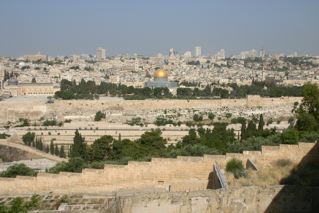
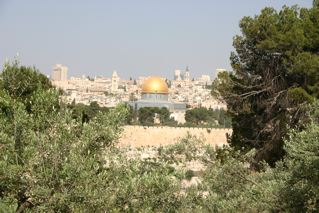
View of Jerusalem

We began our day on the top of the Mount of Olives overlooking the spectacular view of the city of Jerusalem. From here we could see the Kidron Valley and it’s intersection with the Hinnom valley. The Dome of the Rock glistened under the morning sun and the tall spires of the churches stood tall above the city walls. On the backside of the Mount of Olives we spied the desolate wilderness where we experienced thirst and heat during our explorations yesterday. Dr. Laney is teaching us about the geography of the land and he wants us to know how close the dry and barren wilderness is to the city of Jerusalem. From the Mount of Olives, both can be clearly seen.

Jesus ascended into heaven just after he spoke to His disciples in Bethany, but scripture prophesies his return will take place on the top of Mount Olivet.

The Church of the Ascension

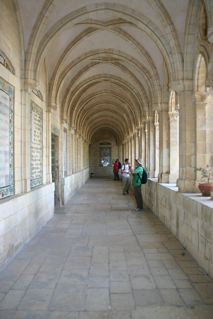
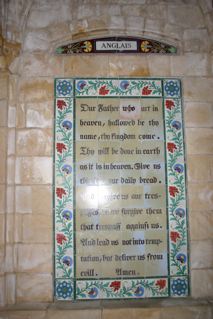
This spot is commemorated by the Church of the Ascension. It is a lovely church that is run by the French and is known for its presentation of the Lord’s Prayer. Within the charming gardens, the prayer is written on tile slabs in every known language. We all searched very hard to find the prayer in our native tongues.

The Lord’s Prayer in “English”

From there we walked along the path that Jesus would have traveled when he walked from the Mount of Olives to the Old City of Jerusalem. We stopped at Dominus Flevit where Jesus wept over the future destruction of Jerusalem (70 AD). The church was constructed in the shape of a tear drop and the views of the old city are most spectacular from here. Many of the places that we visited today were located on the well-beaten path of tourists. Unlike yesterday when we were alone in the wilderness and in the ancient ruins, today we were shoulder to shoulder with people from all the nations. I couldn’t help thinking about Isaiah’s prophecy (Isaiah 2) about the day that will come when all the nations flood into Jerusalem to receive teaching from the Lord and walk in His paths. Indeed Jerusalem draws people from every continent to explore her history and make a connection with the Living God. Despite the crowds and the religious tension here there is a peacefulness among the crowds. I suppose it feels hypocritical to push and shove your way into a Holy Site. 😉

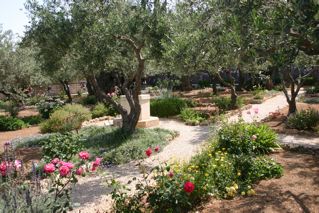
The Garden of Gethsemane

At the bottom of the hill we visited the Garden of Gethsemane. This is the traditional place where Jesus agonized in His Spirit before His arrest and crucifixion. While the trees in the garden are not the original trees, it was interesting to learn of the proximity of the garden to the city and see what an olive grove is like. The twisted wood of the trunks is uniquely artistic.

In the Garden of Gethsemane

From here we boarded our bus and took a short journey out to Herodium where Herod build his temple in the first century BC. He was the epitome of an evil genius- with a grand vision for an opulent lifestyle. He had pools large enough to fit small boats complete with islands for sun-tanning. His grand palace was set atop a tall tel with a staircase tunnel inside the mound. He had a spectacular view of his subjects and I can imagine how he lorded his power over them and intimidated people with his insanity. In fact, Herod killed his favorite wife after suspecting her of being unfaithful and he put 2 of his teenage sons to death because of his fear that they would usurp his power. Not to mention his order to slaughter all the children in Bethlehem in an attempt to prevent the reign of the Messiah.

The place of Jesus’ birth in Bethlehem

Our last church visit for the day was the Church of the Nativity in Bethlehem. This is the traditional place where Jesus was born and there is a gold star in the basement of the church that marks the spot. It is interesting to see people kissing that place and seeking a sacred connection with the Savior. I imagine that Israel is a very spiritually profound place for people from all over the globe. It is called the “navel” of the earth because of its centrality to the continents of Asia, Egypt and Europe. It is certainly a place where people from all nations come together to learn about the things of God and walk the paths of the Holy Sites.

Tomorrow is our first free day and we are looking forward to some much needed rest. I can’t believe it’s only been the first week. We have already seen so much and put so many miles on our feet. Thank you for sharing this journey with me. I am thinking about you each day as I take pictures and think about what I want to share with you Please pray for us on Sunday as it is Jerusalem Day and the city is filling up with various political groups who are championing their causes. The police presence is ramping up and all the merchants on our small street in the Christian Quarter of the city are closing early tonight so as not to attract the attention of any unruly people. Everyone seems to be putting protective measures in place.

Also, check out Bob’s blog http://www.bobnoack.wordpress.com. You will be interested to read the different elements that Bob records from our shared experiences. Now I know how the four gospel writers shared the same experiences but recorded different details. 🙂

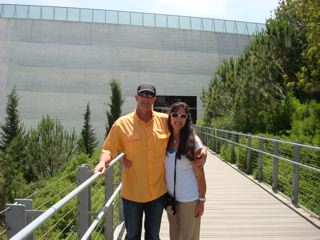
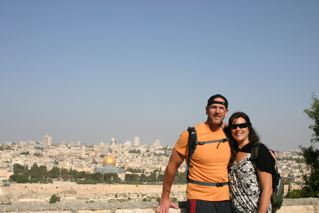
Bob and I are enjoying our learning experience together.

The view of Jerusalem from the place where Jesus wept over the future destruction of the city.